

- Sat Mar 14, 2020 9:10 pm
#10177
I got the machine for free so I'm doing best to make it work. Overall I like the machine and it will go through vinyl well enough for me to get started upholstering but the stitch length max is about 5 per inch which is just not enough for a 207 thread top stitch. I'm not sure I'd recommend this but it worked for me.
The short explanation is that I filed the bottom of stitch length adjustment slot open and increased the stitch length to about 4 per inch. I also added a digital drive with the smallest drive pulley I could find, 1.75 inch. That is an awesome upgrade and worth every penny. Check amazon for the kit. I got a 500 watt motor and controller.
Here's a longer explanation of the stitch length modification.
Tape off the oil holes below the slot to keep filings out.
I have a heavy duty feed dog and needle plate and I think that's necessary because the slot in the needle plate for the feed dog is quite long, much longer than the medium duty assembly.
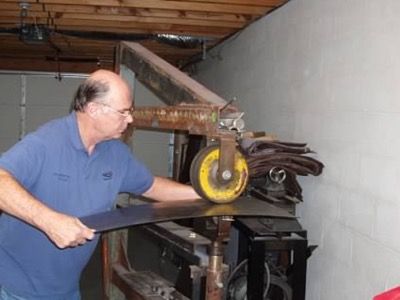
Remove the adjuster screw and push the adjuster further down as you slowly spin the wheel by hand. Listen for any interference in the machine and check your feed dog clearance front and back. You can adjust the travel via the linkages under the work table if needed, my feed dog ran into the needle plate when the dog was farthest from me but small adjustment centered the travel. After I got that done I found that I get an interference in the linkage coming off the shaft the drive pulley is mounted on. I filed the slot open to just short of that point. It took several iterations to finalize.
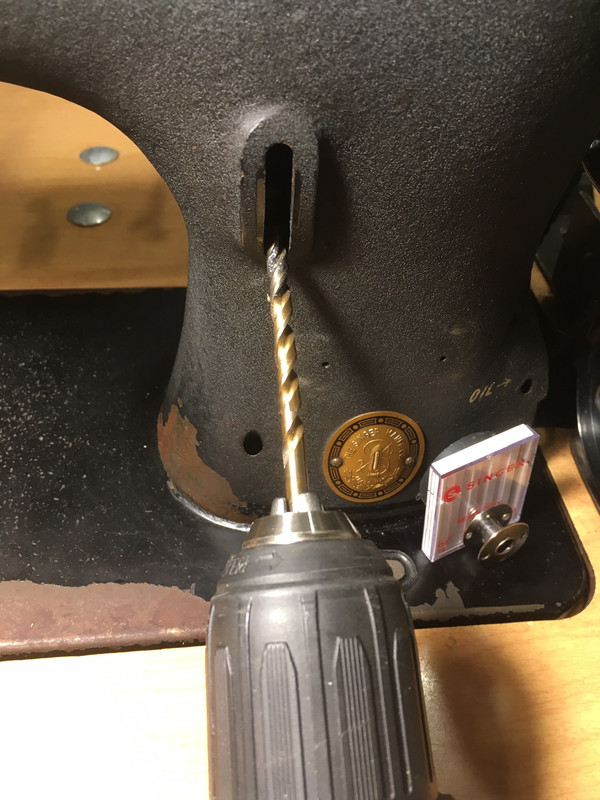
I used a twist drill as a file. I like that it tends to pull the shaving out of the machine. But you can't push too hard or fast and you have to push at a bit of angle as the drill likes to climb in the direction it turning. Luckily it cuts slowly enough you can watch and compensate with the angle you push to get it to cut more or less in the direction you want. Take care not to insert the drill too far and damage anything in the head. See why I don't necessarily recommend this? You could mess this step up pretty easily.
Here's a picture showing the twist drill. Make sure to tape off that oil hole below! I missed that at first and did my best to blast it out with brake cleaner but it would have been a lot better to tape it off before I started.
Checking the travel of the feed dog front and back.
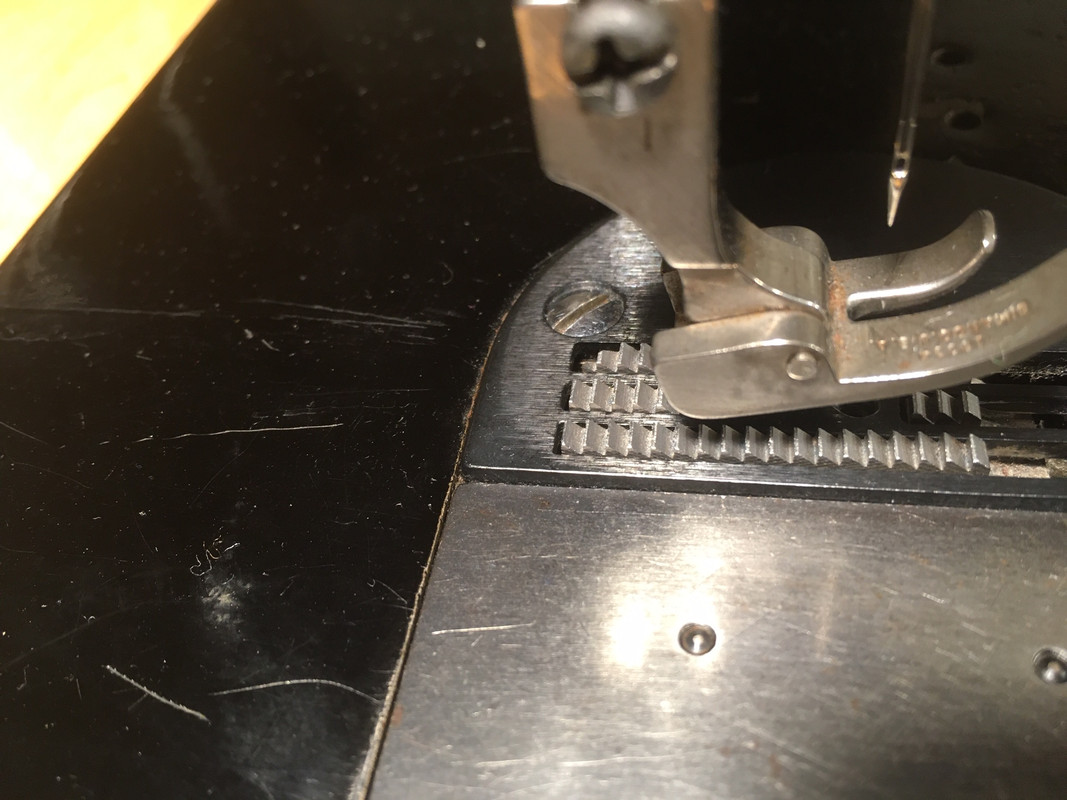
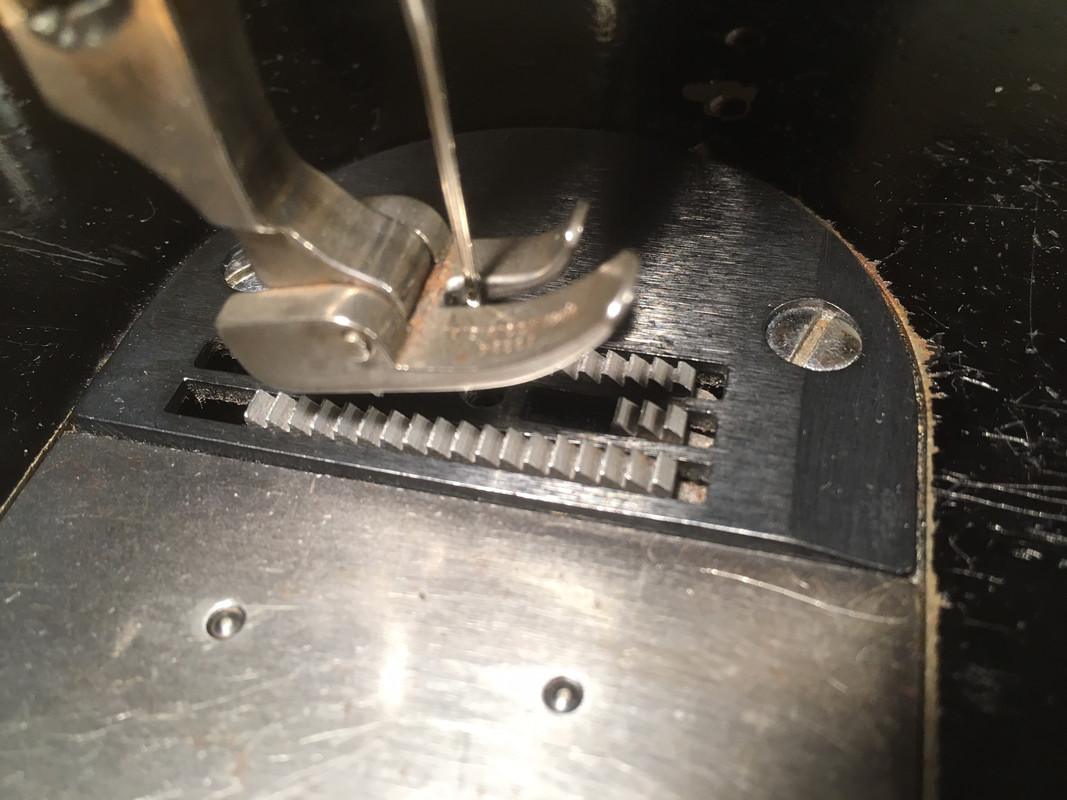
The rough position of the stitch length adjust before and after the modification.
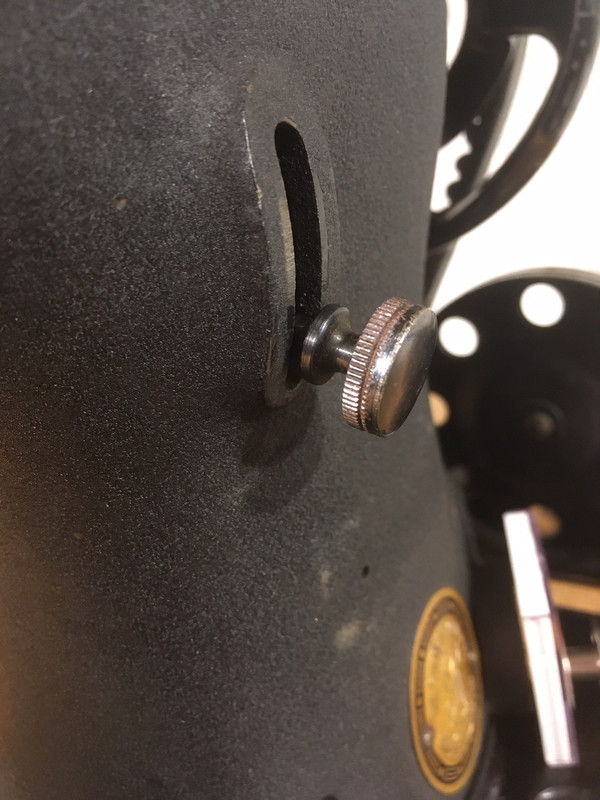
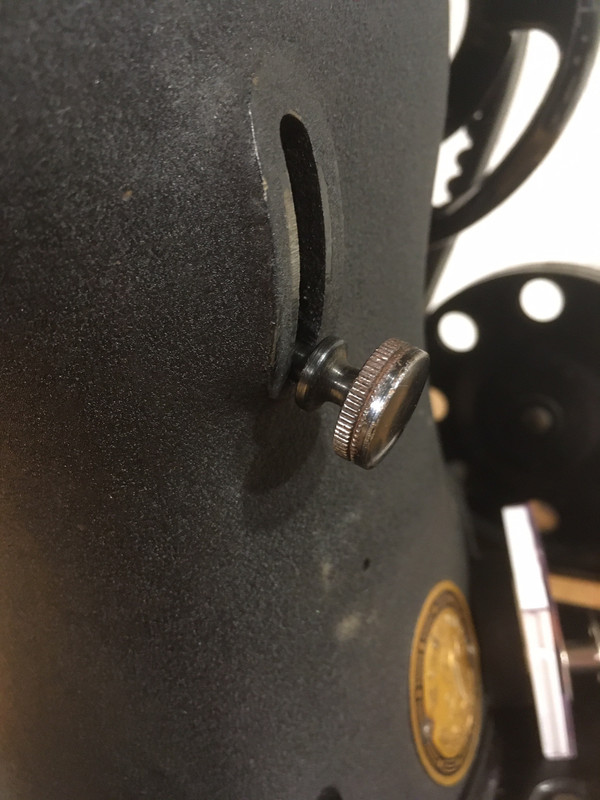
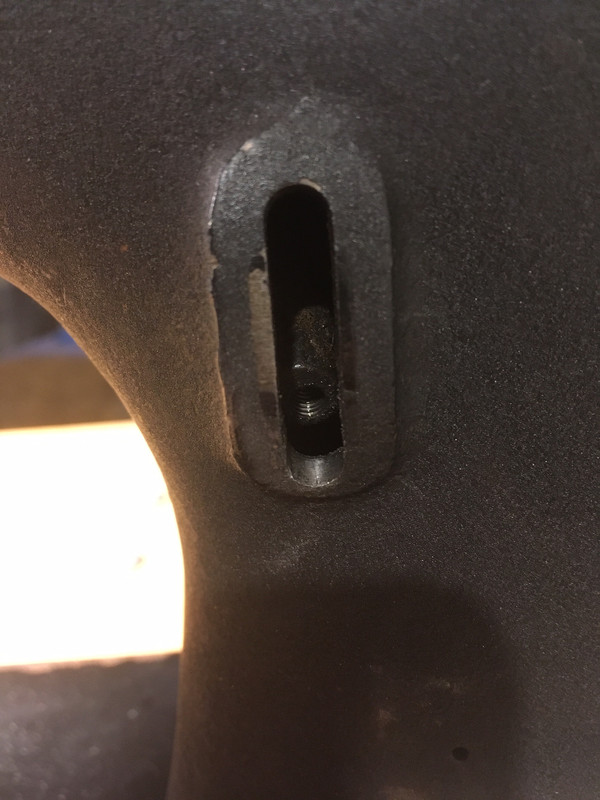
Looking into the slot with the adjusting screw removed. This is also show roughly the amount I was able to open it up if you look at the wear on the edges of the slot, the newly slotted area still has paint on the edges.
The short explanation is that I filed the bottom of stitch length adjustment slot open and increased the stitch length to about 4 per inch. I also added a digital drive with the smallest drive pulley I could find, 1.75 inch. That is an awesome upgrade and worth every penny. Check amazon for the kit. I got a 500 watt motor and controller.
Here's a longer explanation of the stitch length modification.
Tape off the oil holes below the slot to keep filings out.
I have a heavy duty feed dog and needle plate and I think that's necessary because the slot in the needle plate for the feed dog is quite long, much longer than the medium duty assembly.
Remove the adjuster screw and push the adjuster further down as you slowly spin the wheel by hand. Listen for any interference in the machine and check your feed dog clearance front and back. You can adjust the travel via the linkages under the work table if needed, my feed dog ran into the needle plate when the dog was farthest from me but small adjustment centered the travel. After I got that done I found that I get an interference in the linkage coming off the shaft the drive pulley is mounted on. I filed the slot open to just short of that point. It took several iterations to finalize.
I used a twist drill as a file. I like that it tends to pull the shaving out of the machine. But you can't push too hard or fast and you have to push at a bit of angle as the drill likes to climb in the direction it turning. Luckily it cuts slowly enough you can watch and compensate with the angle you push to get it to cut more or less in the direction you want. Take care not to insert the drill too far and damage anything in the head. See why I don't necessarily recommend this? You could mess this step up pretty easily.
Here's a picture showing the twist drill. Make sure to tape off that oil hole below! I missed that at first and did my best to blast it out with brake cleaner but it would have been a lot better to tape it off before I started.
Checking the travel of the feed dog front and back.
The rough position of the stitch length adjust before and after the modification.
Looking into the slot with the adjusting screw removed. This is also show roughly the amount I was able to open it up if you look at the wear on the edges of the slot, the newly slotted area still has paint on the edges.
John liked this

 - By Androoo
 Hi all this is my first post, understan[…]